
No products in the cart.
Uncategorized
MOTS-c Peptide: Mitochondrial Metabolism & Longevity 2026
Humanin is a 24-amino-acid peptide encoded by the 16S rRNA gene, primarily studied for neuroprotection and anti-apoptotic effects. It refers to a small open reading frame within the 12S ribosomal RNA gene in mitochondrial DNA that encodes a 16-amino-acid peptide. In published rodent studies, MOTS-c at doses up to 15 mg/kg has not produced reported serious toxicity. Subcutaneous injection is the route most commonly discussed for potential human use. A 2023 review in Frontiers in Endocrinology noted that lower doses , 0.5–5 mg/kg, were typically administered over 8–12 weeks, while higher doses (10–15 mg/kg) were used in 2–4 week protocols.
Muscle & Brawn does not encourage the use of any compound discussed in this article. Most of the evidence discussed here comes from cell and animal studies (and doses mentioned are anecdotal reports), not recommendations. This article is for educational purposes only and is not medical advice. Unlike most performance peptides, MOTS-c does not work by releasing growth hormone. MOTS-C is a naturally occurring 16-amino acid peptide encoded by mitochondrial DNA , 12S rRNA gene,, not nuclear DNA. MOTS-C is unique on this list as the only true “exercise mimetic”, it works through AMPK activation rather than appetite suppression or growth hormone modulation.
The unique aspect of MOTS-c lies in its direct relationship with mitochondrial functionality and energy metabolism, as opposed to stimulating growth hormones or aiding tissue repair.
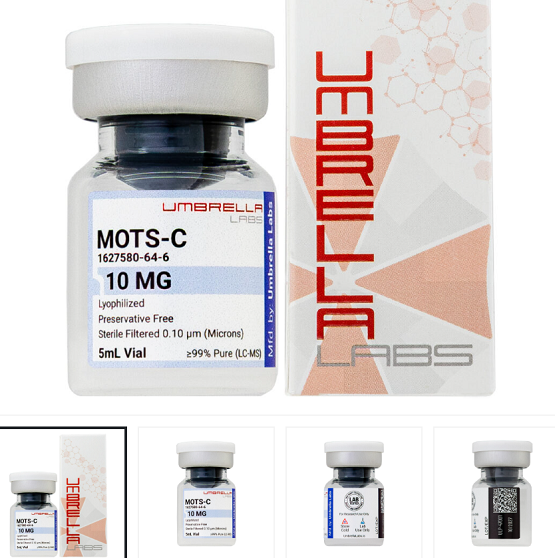
At the common dose of 5mg twice a week, one 10mg vial lasts about a week. This matters more for MOTS-c than for something like BPC-157 or TB-500, which are far more stable once mixed. Leave it on your counter and you’re throwing money away.

Insulin Resistance and Type 2 Diabetes Models
With aging, natural buy MOTSc peptide MOTS-c levels decline, potentially contributing to insulin resistance, metabolic disorders, and weight gain. MOTS-c is a 16-amino acid peptide encoded by the mitochondrial 12S rRNA gene that plays a role in energy metabolism regulation. In Reynolds 2021, skeletal muscle from MOTS-c-treated mice showed significant metabolic changes only in animals that had exercised; non-exercised mice showed no significant alteration. In the same paper, skeletal muscle from treated mice changed metabolically only if the animals had exercised. No human trial has tested any of these doses.
That single experiment is where the “exercise mimetic” reputation comes from. Exactly how it behaves inside a human body hasn’t been established. HHS may revisit it (in whole or in part), if a safety signal or product-quality issue arises. FDA found no published data on administered MOTS-c in people, so there is no established clinical safety profile and this page cannot describe it as safe.
Position it as a mitochondrial support peptide for patients with metabolic syndrome, insulin resistance, or significant fatigue. Subcutaneous Protocol , standard,5 to 10 mg subcutaneous, 1 injection every 5 days for 20 days. Research protocols most commonly use 5 mg injected subcutaneously three to five times per week. MOTS-C (Mitochondrial Open Reading Frame of the 12S rRNA Type-C) is a 16-amino acid peptide encoded by the mitochondrial genome — first identified in at the University of Southern California. MOTS-C was only discovered in 2015; long-term safety data in humans is still being established. Injection site discomfort or rednessMild nauseaTemporary flushing or warmthHeadache , uncommon,
These peptides arise from short open reading frames within or overlapping the mitochondrial rRNA genes — and they exit the mitochondrion to act as signaling molecules in the cytoplasm, on the cell membrane, and at distant tissues through the circulation. The goal is to make the molecular story legible and to draw a clear line between what is reasonably well established and what remains preliminary. This article is a mechanism deep dive aimed at non-specialists. Discover the latest articles (books and news in related subjects), suggested using machine learning.
(Animal studies used much higher body-weight-scaled doses that don’t translate, so ignore those numbers.) So it’s real biology with a promising story that human research hasn’t fully caught up to. A few small studies show MOTS-c levels track with strength and climb with endurance training, and early work hints a single dose might help a workout.
The MOTS-c Stability Problem
The previous assertion that a mouse dosage corresponds to a human range of 5–15 mg daily did not have adequate evidence. The registered study in phases 1a and 1b evaluated the effects of both single and repeated subcutaneous injections in healthy individuals and those suffering from fatty liver disease. Physical performance was examined in separate mouse studies that applied intraperitoneal administration.
Standard employment and athletic drug tests do not include MOTS-c. BPC-157 (a synthetic peptide sourced from gastric protein), has been researched for its potential in promoting soft-tissue healing. Mild effects reported consist of temporary reactions at the injection site and (less frequently), mild gastrointestinal symptoms.
In shorter studies lasting 2 to 4 weeks, higher dosages of 5–15 mg/kg have been utilized. Systemic injection of MOTS-c in older mice (12 months old) resulted in the reversal of age-related insulin resistance in skeletal muscles. These findings related to exercise associate MOTS-c with other peptides investigated for their roles in athletic performance and mitochondrial health. For those interested in exploring other peptides linked to metabolic applications (refer to our guides on semaglutide and AOD-9604), along with recommendations for the best peptides targeting fat loss. The landmark Cell Metabolism paper from 2015 identified MOTS-c as a key metabolic regulator. His research team performed systematic bioinformatic explorations of the mitochondrial genome to find more small open reading frames , sORFs, that could potentially produce functional peptides.
If opting for three doses per week, consider adding one vial weekly instead. More frequent, smaller doses are commonly regarded as a method to stabilize AMPK signaling, given the peptide’s estimated brief half-life. Each dose requires one vial (to be shared across two doses), a syringe, two alcohol swabs, and a small quantity of bacteriostatic water. The primary effect investigated is the activation of a protein known as AMPK, which serves as a crucial energy switch within cells.
